
Criminal Court Cases in Marin County
The Marin Superior Court Criminal Division hears both felony and misdemeanor actions. California does not divide these cases between separate county and district trial courts. The People of the State of California prosecute the action, while the clerk preserves the public case history. Criminal Division staff work in Room C-10 at the Civic Center Hall of Justice in San Rafael. The desk is open from 8:00 a.m. to noon and 1:00 p.m. to 4:00 p.m. Phone service at (415) 444-7070 runs from 9:00 a.m. to noon and 1:00 p.m. to 2:00 p.m.
Traffic citations and some non-traffic infractions also route to the Superior Court, through its Traffic Division in Room C-10. Juvenile matters use a separate location and are subject to strong confidentiality rules. This court structure matters because a city police arrest does not create a city court file. Once charges are filed, Marin County Superior Court is the central trial-court custodian.
Marin County ePortal Date Split
Marin County has a sharp electronic dividing line. The ePortal overview directs the public to current case and calendar tools, but criminal proceedings that predate June 20, 2023 remain in EJUS. Matters after that transition use the newer public portal. A blank result in one system therefore does not establish that no case exists.
Use the filing or proceeding date to choose the system. For a name that may span years, check both. The portal can show public party information and future events, while its calendar search can narrow by date, case type, and courtroom. Full electronic documents are not generally open to anonymous public users. Parties, attorneys, and justice partners have broader document access than a general public account.
The official ePortal view is pictured below. Its search and calendar choices help identify a matter before a copy request is sent.
View the source for Marin Superior Court's ePortal access rules.
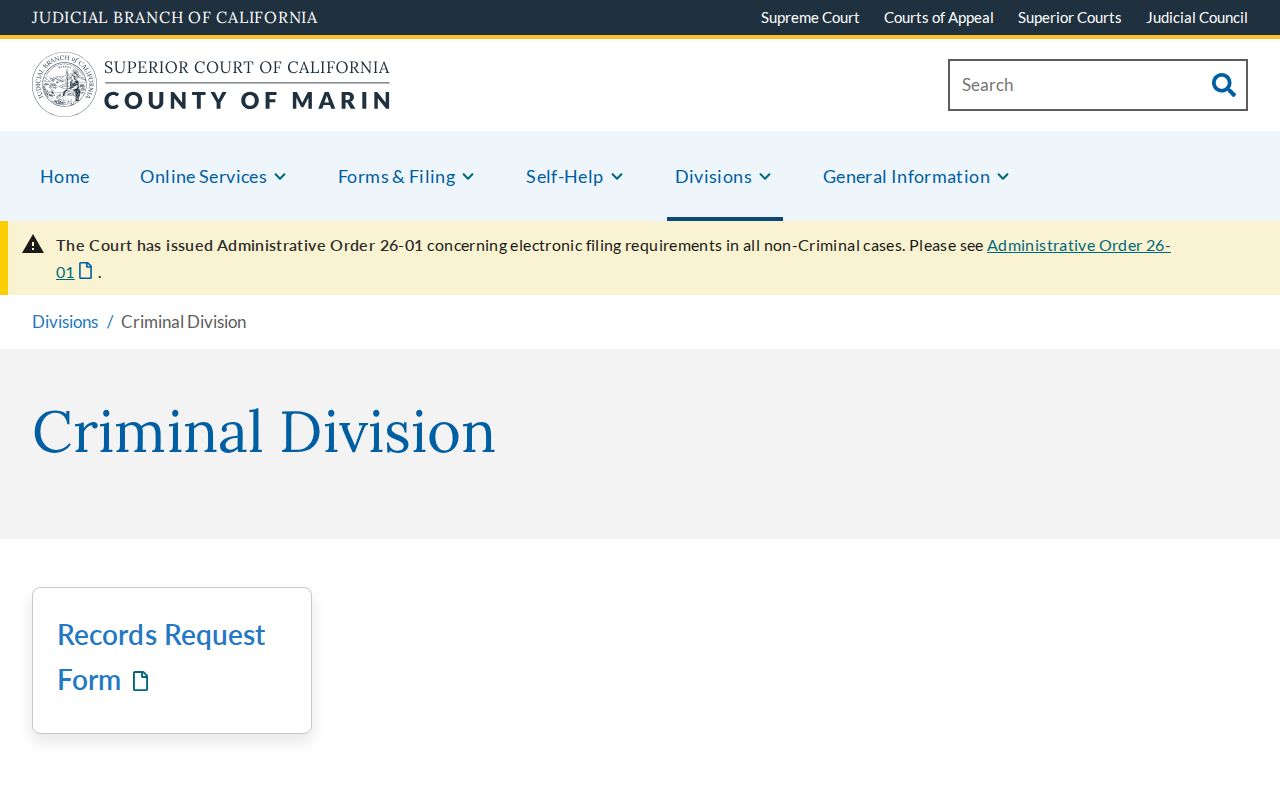
The court's own page confirms that felony and misdemeanor case administration stays with the Criminal Division.
Marin County Case Record Searches
Start with a case number when available. It is more precise than a name, especially when names are common or have changed. A party-name search can still locate a public index entry, but spelling and the correct date range matter. Use the court calendar when the main question is an upcoming hearing.
- Open the court's ePortal overview and choose the public case or calendar search.
- Use the newer public portal for criminal activity after June 20, 2023.
- Check EJUS for criminal proceedings before the transition date.
- Read the party data, future events, and register entries that are publicly displayed.
- Ask Court Records & Exhibits for inspection, copies, research, or a docket when the online result is not enough.
| Search element | Use | Access note |
|---|---|---|
| Case number | Direct route to one matter | Best identifier when known |
| Party name | Find public cases tied to a name | Sensitive data may be limited |
| Case type | Narrow criminal or calendar results | Useful with a broad date search |
| Hearing date | Find a daily calendar | May be paired with courtroom |
| Future events | Track the next listed event | Confirm changes with the clerk |
Marin County Room 113 Requests
Online case data is an index, not the whole file. The Court Records & Exhibits office in Room 113 handles public inspection, research, copies, dockets, and non-confidential exhibits. Its phone is (415) 444-7080. The court warns that record requests can face a queue exceeding six weeks, so time-sensitive requests should be framed narrowly and submitted early.
Copies cost 50 cents per page according to the court research. The request form asks for enough case detail to identify the record. Confidential identifying material must be handled through the court's stated secure or drop-box procedure, not placed in casual email. Older records may require staff research, archived media, or a review for restricted material.
See the official Court Records & Exhibits request instructions.
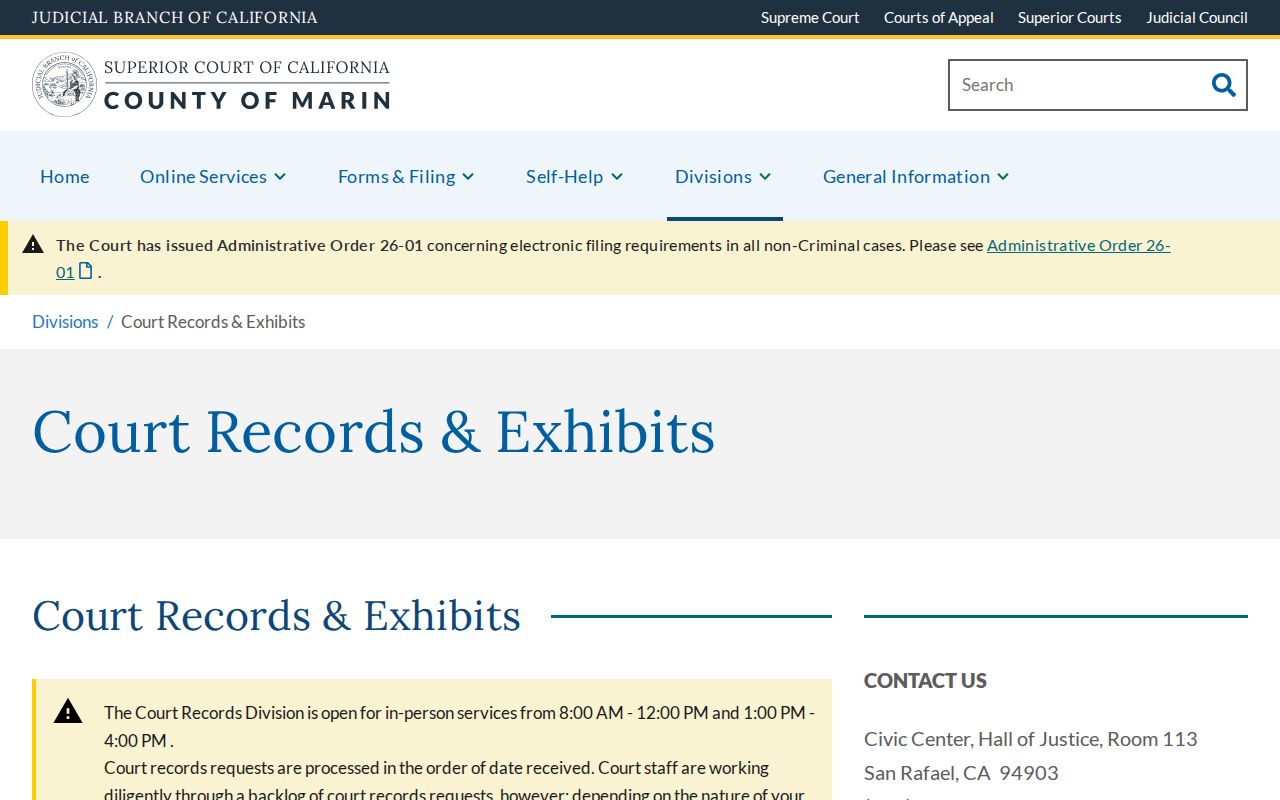
This official screen shows why Room 113 is the fallback when remote docket data does not answer the question.
What a Marin County Criminal File Contains
A Marin County criminal case file tracks the prosecution, not every event in a person's history. The charging document identifies the offenses prosecutors filed. The register of actions is a dated list of court events. Minutes, motions, orders, pleas, and judgment materials add detail when they are public and available for inspection.
| Case number and court | The file's stable identifier and Marin Superior Court division. |
|---|---|
| Charging document | The complaint, information, indictment, or citation that states filed allegations. |
| Register of actions | A chronological summary of hearings, filings, rulings, and case status. |
| Hearing dates | Past and future calendar events, subject to court changes. |
| Disposition and judgment | The dismissal, acquittal, plea, conviction, or other final result. |
| Sentence and conditions | Custody, fines, probation, or other terms stated by the court. |
Charges at arrest may differ from charges filed by the prosecutor. Likewise, a docket line may summarize an order without reproducing it. Request the actual public document when exact wording controls.
Reading Marin County Docket Entries
The register of actions is often the fastest way to reconstruct a case. “Arraignment” is the hearing where the defendant is advised of charges and enters a plea. “Pretrial” covers conferences, motions, discovery issues, and settlement work before trial. “Disposition” means the outcome, not merely the last hearing shown.
Status deserves care. An open case may have future events. A closed case can end through dismissal, acquittal, plea, or judgment after trial. A minute order records what the court did at a hearing, while the charging document records what prosecutors alleged. None should be read in isolation.
Criminal Case Stages in Marin County
After a prosecutor files charges, Marin Superior Court sets arraignment. Pretrial proceedings follow, including motions and discussions that can alter or dismiss counts. The matter then resolves by plea, dismissal, or trial. A conviction leads to judgment and sentencing, sometimes with later probation or record-relief proceedings.
Case flow: Charges Filed › Arraignment › Pretrial › Plea or Trial › Disposition › Sentencing
The flow is not a promise of timing. Continuances, added filings, competency questions, and other orders can change the sequence. The register of actions is the place to see what happened in one Marin County matter.
Marin County Remote Document Limits
California courts distinguish between remote electronic access and courthouse access. Public users may see indexes, calendars, party data, and event information online while needing the courthouse for the full criminal record. This is a limit on delivery, not proof that the underlying public document does not exist.
The source image below comes from the official Traffic Division, which also shows that city and non-traffic citations can enter the county court system.
Review Marin Superior Court's official Traffic Division page.
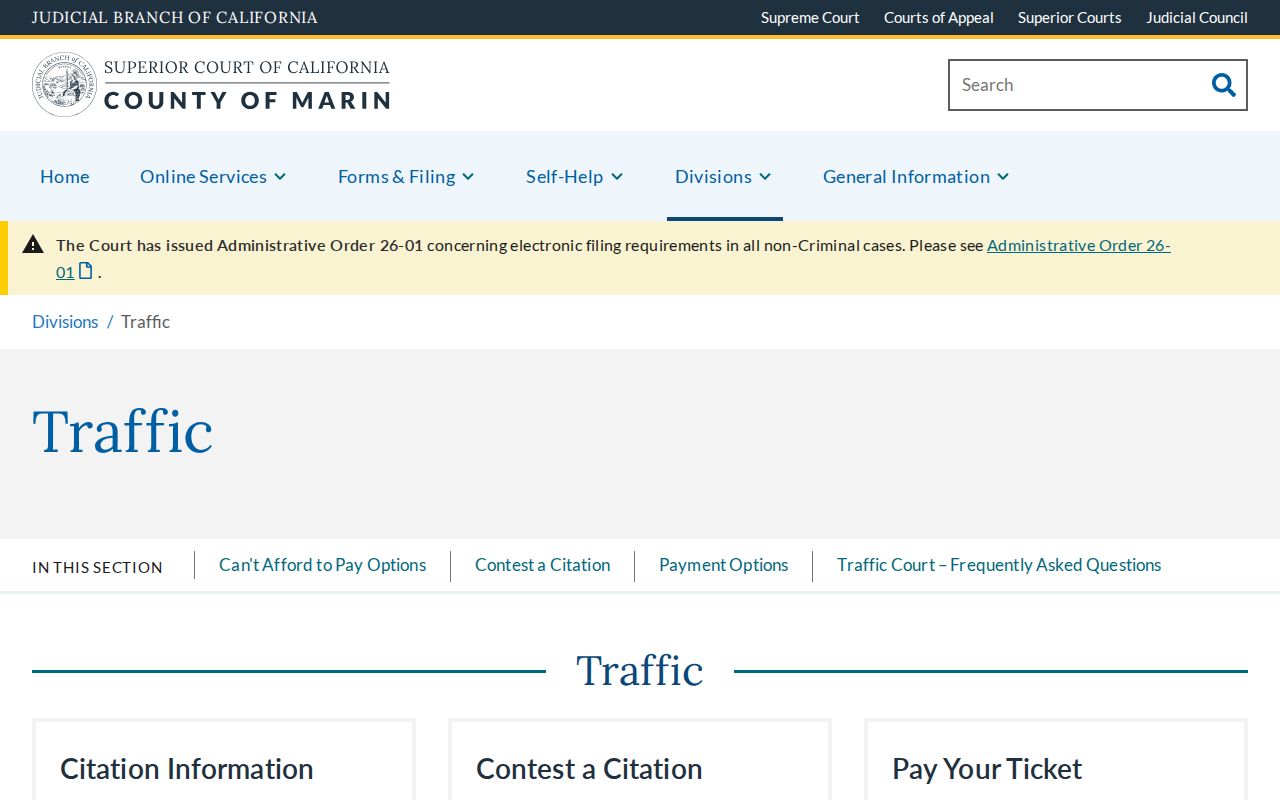
The division boundary helps readers route a citation without mistaking it for a separate municipal criminal court.
Federal cases are separate. Marin County lies in the Northern District of California, so a federal prosecution is searched through federal court channels rather than Marin Superior Court.
View the official Northern District of California court site.
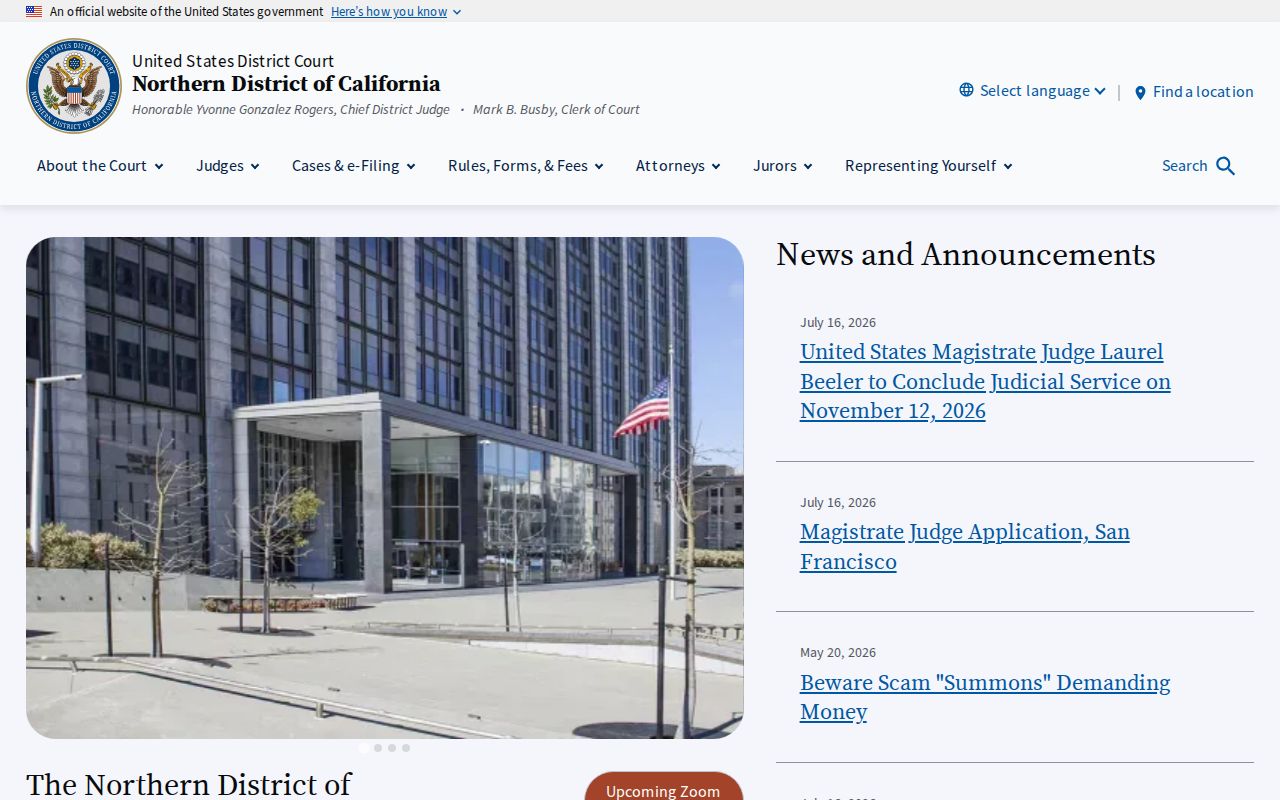
This federal court source marks the jurisdictional boundary between county-filed and federal criminal cases.
Access Rules for Marin County Case Records
Public access does not extend to every detail. Juvenile case records are generally confidential. Victim data, protected addresses, personal identifiers, sealed arrest material, and records covered by a sealing order may be removed or withheld. Remote criminal-document access is also narrower than courthouse inspection.
When a Marin County case does not appear, check both electronic eras before assuming it is sealed. Then contact Criminal Division for case administration or Room 113 for records and copies. Statewide self-review is different: California DOJ provides a fingerprint-based record review to the subject, not a public name search. For the arrest event that preceded a filed prosecution, use the county arrest search channels and the arresting agency's report process.
Note: An absent portal result can reflect the date split, access limits, spelling, or an unfiled arrest rather than a nonexistent case.